
Kalonji
Explore kalonji for hair, its traditional use in Ayurvedic and Unani hair care, natural constituents, scalp relevance and what modern research suggests.
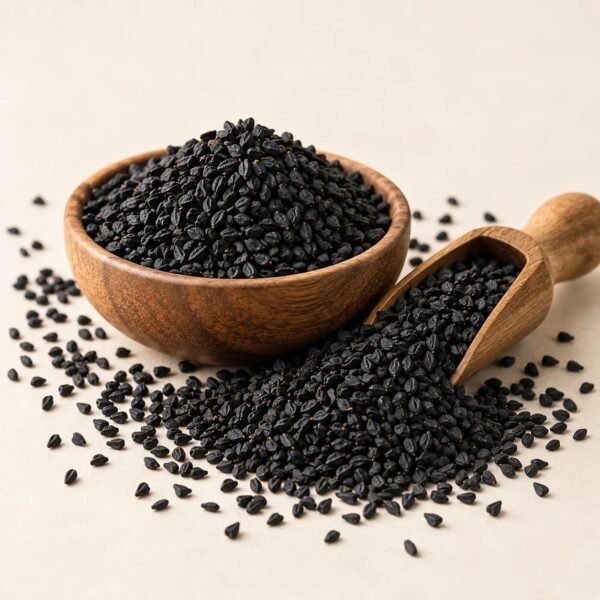
Origin
Southwest Asia and the Mediterranean region
Traditional wisdom
Ayurvedic and Unani hair oiling traditions, used for scalp care and as an addition to medicated hair oils
Why Soumm chose it
Traditional relevance for scalp care and conditioning, and a long history alongside sesame and coconut oil in hair rituals
Quick facts
- Botanical name
- Nigella sativa L.
- Common names
- Kalonji, Black Seed, Black Cumin, Nigella, Kala Jeera, sometimes called Black Onion Seed
- Source type
- Annual flowering herb; seeds used as the source material
- Part used
- Seeds; cold-pressed into oil or infused for topical use
- Natural constituents
- Thymoquinone, essential fatty acids including linoleic acid, and phytosterols
- Scalp relevance
- Believed antioxidant and soothing properties for the scalp
- Evidence status
- Traditional relevance is well established; human clinical evidence specific to hair growth remains limited, and current research should not be read as a guarantee of results.